
Make Confident
Brand Decisions After a Merger
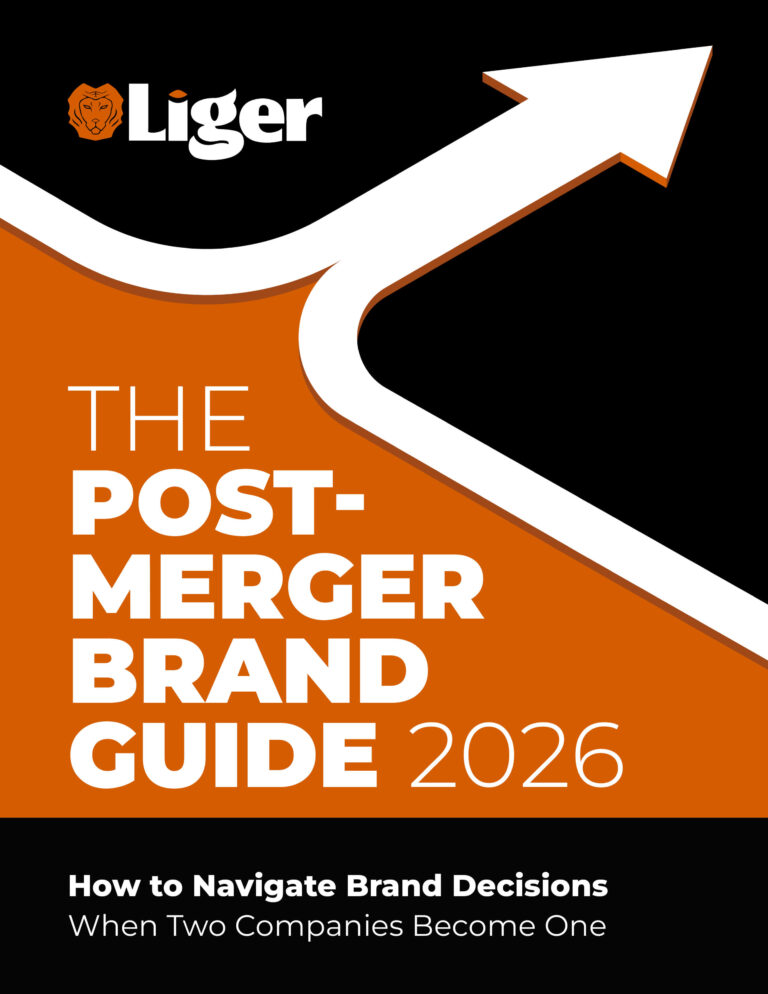
Tell us where to email the workbook, and we’ll send it right away.
Oops! Something went wrong while submitting the form
What You’ll Learn
Brand architecture is one of the most emotionally charged (and strategically important) decisions in any merger. Without a structured evaluation process, teams debate endlessly, delay integration work, and create inconsistent messages for customers and employees.
This guide gives leadership teams a clear decision path. Inside, you’ll learn how to:

Assess brand equity and customer recognition across merged entities

Evaluate the customer impact of different post-merger brand structures

Understand how brand architecture influences naming, communication, and go-to-market alignment

Identify operational risks such as duplicated systems, unclear messaging, and delayed integration

Move from debate to decision with a practical, repeatable framework
Everything is designed to help you make an informed, confident, and unified brand decision.
Who This Guide Is For
This guide is designed for leaders steering merger integration and needing a smart, structured way to finalize how the organization shows up. It’s especially valuable for:

- CEOs and executive sponsors
- CMOs, brand leaders, and marketing executives
- Private equity operating partners
- Corporate development and M&A teams
- Sales, product, marketing, and HR leaders guiding internal and external communication
- Integration management offices
This guide is designed for leaders steering merger integration and needing a smart, structured way to finalize how the organization shows up. It’s especially valuable for:
Why Brand Architecture
Matters After a Merger
The direction you choose isn’t just naming. It affects customer perception, retention, operational efficiency, and brand valuation. When architecture is unclear, teams fill gaps with their own assumptions, creating friction, delays, and lost revenue velocity. But not when you have effective brand architecture.
Customer Clarity
Customers look for stability during a merger. A clear brand structure reduces confusion, improves retention, and strengthens trust.
Employee Alignment
Teams rally faster when they know the unified identity, narrative, and direction of the organization.
Operational Efficiency
Brand architecture determines how teams consolidate websites, systems, naming, marketing assets, and communication channels.
Strategic Positioning
Your chosen direction signals priorities to investors, partners, and the broader market.
A strong brand architecture accelerates integration. A weak or ambiguous one slows everything down.

What’s Inside the Post-Merger Brand Guide
A Practical Brand Architecture Decision Tree
A step-by-step evaluation tool that helps you weigh brand equity, customer considerations, operational complexity, and cultural alignment. Follow the prompts to identify the brand structure that best supports your strategy.
Four Clear Brand Structure Options Explained
Each includes “Use When” scenarios and key considerations:
1
New Brand
A fresh identity representing a shared future.
Best for: Balanced equity, major transformation, and signaling a new chapter.
2
Consolidated Brand
One unified brand becomes the primary identity.A fresh identity representing a shared future.
Best for: A strong lead brand, high recognition, and a need for speed and clarity.
3
Endorsed Brand
Existing brands remain, supported by a parent endorsement.
Best for: Transitional phases, regional or niche equity, or staged integration.
4
Portfolio Brand
Multiple independent brands under a shared organization.
Best for: Distinct markets, diverse business units, and varied customer needs.
Understand how each path affects:
Understand how each path affects:
- Customer messaging and retention
- Sales enablement and positioning
- Product and service naming
- Website and domain strategy
- Internal communications and culture integration
- Governance and long-term brand use

Leadership Discussion Prompts
A set of structured questions designed to reduce emotional debate (no need for claws to come out) and guide teams toward a rational, aligned outcome.
How to Use the Guide
Bring this guide directly into leadership discussions, integration planning sessions, and brand alignment workshops. It’s designed to help your team:
FAQ
How does unclear brand architecture affect customer retention after a merger?
When a merger creates mixed brand signals, customers quickly question stability, ownership, and service continuity. This leads to churn, stalled renewals, and slowed pipeline velocity, all of which are totally avoidable. The brand architecture guide helps you unify messaging so your teams deliver one consistent, confidence-building narrative across every customer touchpoint.
Will this guide help reduce confusion between marketing, sales, and product teams?
Yes. Many integrations stall because teams operate with different assumptions about the brand, naming, competitive position, and GTM narrative. The decision tree gives all teams a shared starting point, reducing rework, messaging conflicts, and misalignment between sales plays and marketing campaigns.
Can the guide help us stop running two websites, two CRMs, and two sets of marketing assets?
Absolutely. Unclear brand direction leads to operational bloat: duplicate websites, duplicate content libraries, fragmented campaigns, and inconsistent nurture flows. By defining the brand structure early, you eliminate redundancy and accelerate system consolidation, improving efficiency and lowering costs.
How does brand architecture impact sales enablement?
Sales teams need clarity on what the combined company stands for, how to position offerings, and how to explain the merger in simple terms. Without it, reps struggle to tell a coherent story, slowing deals and eroding trust. The guide helps you land the architecture that supports a clean, confident value narrative for your reps.
We’re worried about losing brand equity. Does the guide help us evaluate that risk?
Yes. The decision tree specifically walks you through equity considerations, including:
- Market recognition
- Regional loyalty
- Product-line strength
- Competitive differentiation
It helps you assess whether to protect, merge, or sunset existing brand equity based on real strategic value.
Our teams are arguing about the name. Will this help move us past the debate?
Yes. Most naming conflicts come from unmanaged expectations and emotional attachment. The guide provides a rational, criteria-based framework that shifts conversations from opinions to strategy, so decisions actually move forward.
How will this guide support revenue continuity and cross-sell strategy?
Brand architecture affects how product lines are grouped, named, and communicated. Clear structure helps customers understand how offerings fit together, enabling cleaner product bundling, cross-sell motion, and upsell pathways.
Will this guide help us communicate the merger to customers without overwhelming them?
Yes. One of the biggest fears for marketing teams is over-communicating or confusing customers. The guide highlights which architecture choices require immediate communication, which can be phased, and how to message change with clarity and consistency.
We don’t have internal alignment on messaging. Does the guide help with narrative clarity?
Indirectly, yes. Messaging depends on brand architecture. Once you choose the structure, your narrative framework becomes far easier to define:
- Who we are now
- What’s changing
- What stays the same
- Why the merger benefits customers
A strong architecture prevents messaging conflicts and builds internal alignment.
Will this work if our merger includes multiple subsidiaries, product lines, or regions?
Yes. The guide is built for both single mergers and complex portfolios. Sales and marketing leaders managing multiple business units can use the decision tree to understand whether they should unify, endorse, or segment brands, ensuring clarity across markets and geographies.
How quickly can we make a brand architecture decision using the guide?
Many leadership teams reach alignment within one or two working sessions when using the decision tree. It dramatically speeds up decision-making by reducing ambiguity, emotional arguments, and the “analysis paralysis” that often delays integration by months.